


We are avid travel experts
Let us assist you in making your trips unforgettable

Vietnam has passed through many dynasties, but nowhere is that legacy more visible than in Hue, home to the Nguyen Dynasty — the country's last royal dynasty, which ruled from 1802 to 1945. The Imperial City, ancient gates, palace courtyards, and royal tombs make Hue one of the few places in Vietnam where history feels physically present rather than just remembered.
The architecture adds to the appeal. Traditional Vietnamese imperial design — tiled roofs, carved detailing, and balanced courtyard layouts — blends in places with French and Western influences from the later Nguyen period. That mix gives Hue's monuments a distinct character: ancient, elegant, and unlike anywhere else in the country.
For travelers who appreciate history told with nuance rather than rushed through in a checklist, a private guide is especially worthwhile in Hue. Many of the stories behind these walls — of ambition, family duty, and quiet sorrow — are far richer when explained slowly, with time to look closely at the details.
One of the first things visitors notice in Hue is how quiet the city feels, especially around midday. Streets empty out under a bright, sleepy heat, while local vendors and workers continue their day beneath rows of green trees.
Unlike bigger Vietnamese cities, where the pace often pushes you to move quickly, Hue invites the opposite. It asks visitors to look longer, listen more carefully, and notice the small details: a shadow on an old wall, the curve of a tiled roof, or a quiet smile from a passerby.
This unhurried rhythm makes Hue especially well suited to travelers who prefer a relaxed itinerary — fewer stops per day, comfortable pauses for tea or rest, and time to simply take a place in rather than photograph it and move on.
No trip to Hue is complete without visiting its royal tombs, and two stand out above the rest: the Tomb of Tu Duc and the Tomb of Khai Dinh.
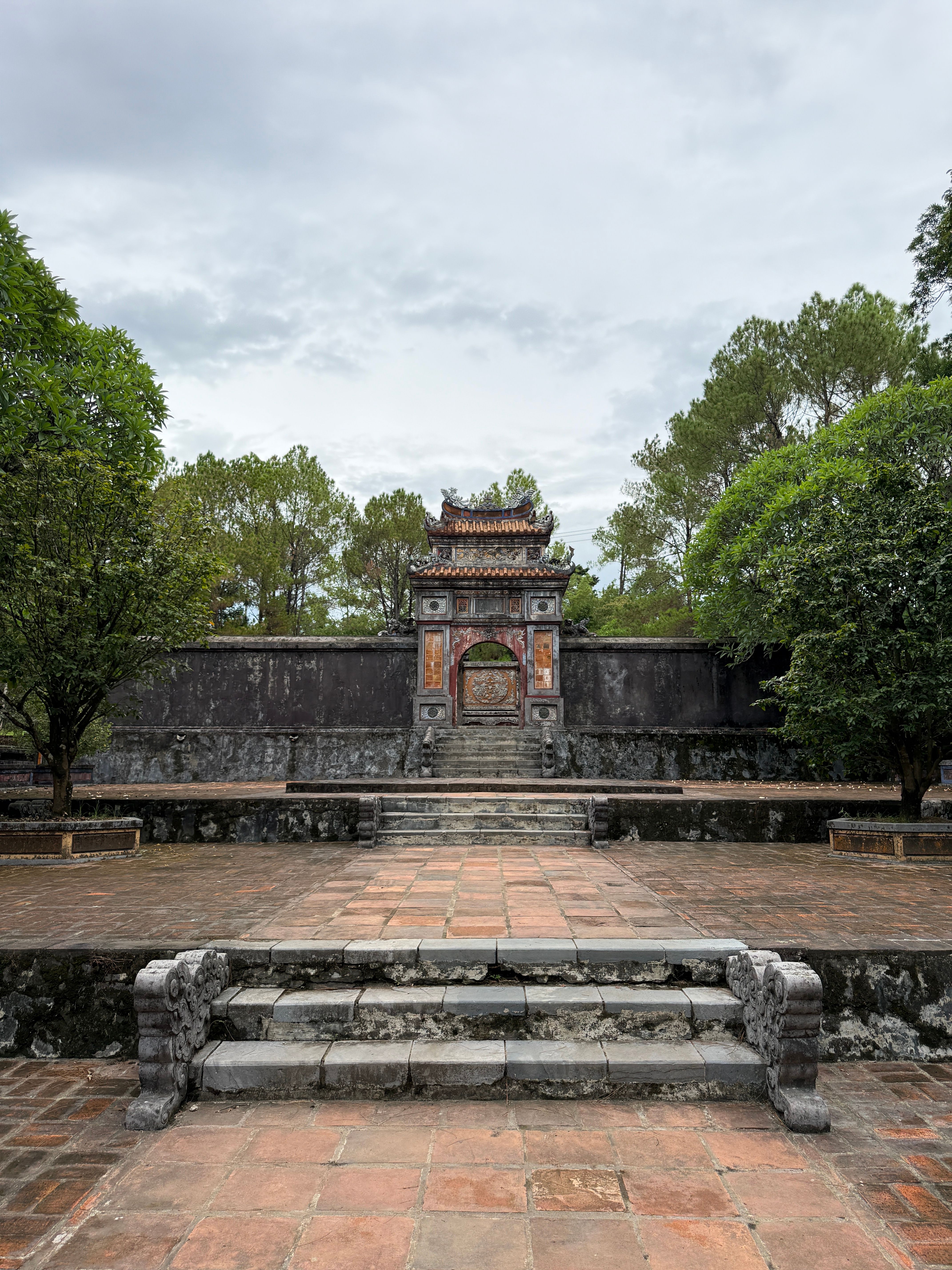
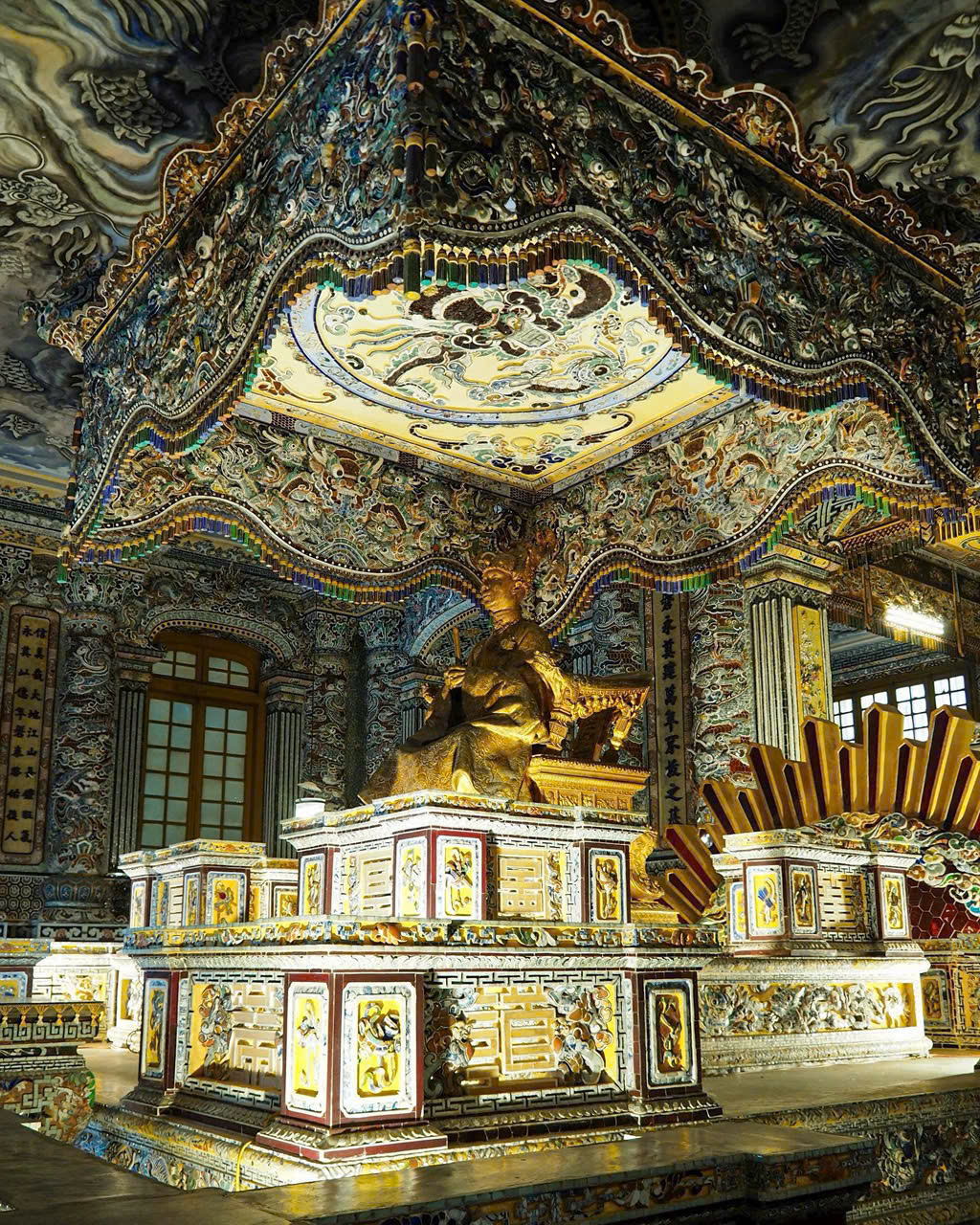
A traditional nón lá (conical hat) is genuinely useful here, not just for photos — Hue's sun can be strong, and the tombs are mostly open-air. We'd also suggest visiting in the early morning or late afternoon, when the light is softer and the heat far more manageable, and allowing enough time at each site to simply sit, look around, and take it in rather than move quickly between the two.
Each tomb reflects the personality of the emperor who commissioned it — some poetic and calm, others powerful and intense — but all share the same level of craftsmanship, and all reward visitors who take their time.
For travelers who'd like to experience Hue's atmosphere without much walking, a slow boat ride along the Perfume River is one of the most comfortable and memorable ways to take in the city. Traditional dragon boats drift past riverside pagodas, including the iconic Thien Mu Pagoda, offering a seated, unhurried view of Hue's skyline and daily river life. In the late afternoon light, with the water turning gold and the bells of Thien Mu drifting faintly across the river, it's easy to understand why so many poems and songs have been written about this stretch of water.
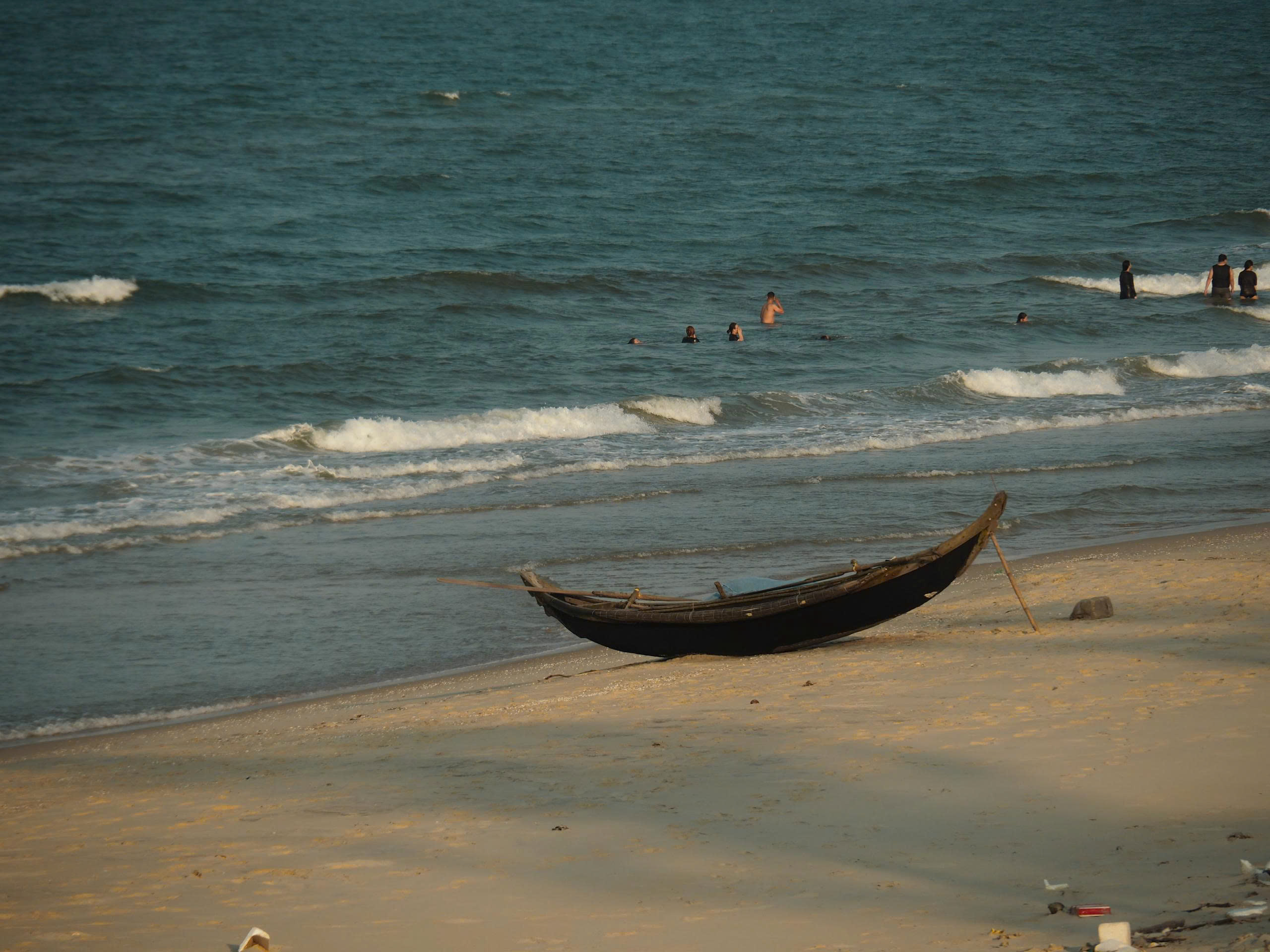
After the tombs, Lang Co Beach offers a softer, more low-key contrast. It doesn't have the postcard-blue water of beaches like Nha Trang, but it makes up for it with a raw, untouched quality — few crowds, no beach clubs, and no lines of tourists. It's a peaceful place to sit, breathe in the sea air, and simply rest for an afternoon.

Hue is easy to reach from Hanoi, with options to suit different comfort levels:
Hue's climate is generally hot and humid, but conditions shift with the seasons:
For travelers sensitive to heat, March–April or September–October often strike the best balance: warm but not extreme, with fewer crowds at the major sites.
Travelers often continue on to Hoi An's lantern-lit old town, or begin further north among the caves of Phong Nha before making their way south — Hue sitting comfortably in the middle of that journey. A few itineraries we've put together along these lines include
Uniquely, each built around a similarly unhurried pace.
Hue isn't a city that tries to impress with skyscrapers, traffic, or nightlife. Instead, it welcomes visitors slowly — through its imperial history, detailed architecture, gentle people, and a quiet, poetic charm along the river. It's a destination that rewards patience, comfort, and a willingness to linger.