


We are avid travel experts
Let us assist you in making your trips unforgettable

Tet follows the lunar calendar, so exact dates shift each year, typically landing between late January and mid-February. The official holiday runs about 7 days, but its effects on daily life — transportation, business hours, pricing — extend across roughly two to three weeks. Since the dates change annually, it's worth confirming them for your specific travel year before finalizing plans.
Tet isn't a single event but a layered mix of quiet family ritual and public festivity, and travelers get to witness both sides of it.
Flower markets, days before Tet. In the week leading up to New Year's Eve, cities fill with flower markets — peach blossoms in the north, apricot blossoms and marigolds in the south, kumquat trees everywhere. Families select these to decorate their homes for good luck, and the early-morning bustle of these markets is one of the most authentic scenes to observe.
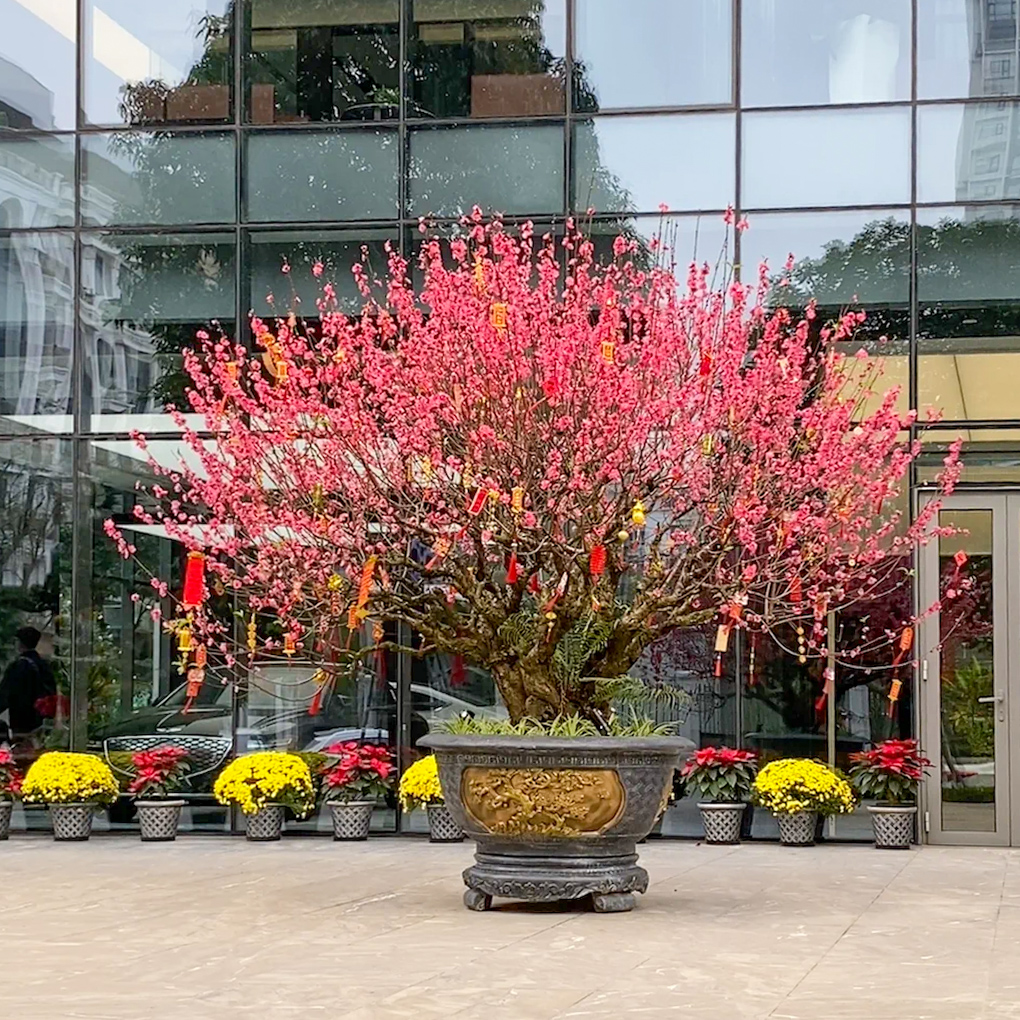
Streets decorated in red and gold. Old quarters and city centers — Hanoi's Old Quarter, Hoi An's ancient town, Ho Chi Minh City's Nguyen Hue flower street — are decorated with lantern wreaths, hanging ornaments, calligraphy stalls, and elaborate flower displays. Red and gold are believed to bring good fortune and prosperity for the new year, which is why they dominate every decoration in sight. Street calligraphers write New Year wishes in ink, a tradition worth pausing to watch.
New Year's Eve fireworks. Major cities hold public firework displays at midnight, drawing large crowds along riversides and central squares — a communal moment shared by locals and visitors alike.
Temple visits in the first days of the new year. From day one onward, locals visit pagodas to pray for health, luck, and prosperity. Visitors are welcome to observe, with incense smoke and offerings on full display — modest dress and a respectful manner are appreciated, as this is a sincere ritual rather than a performance..
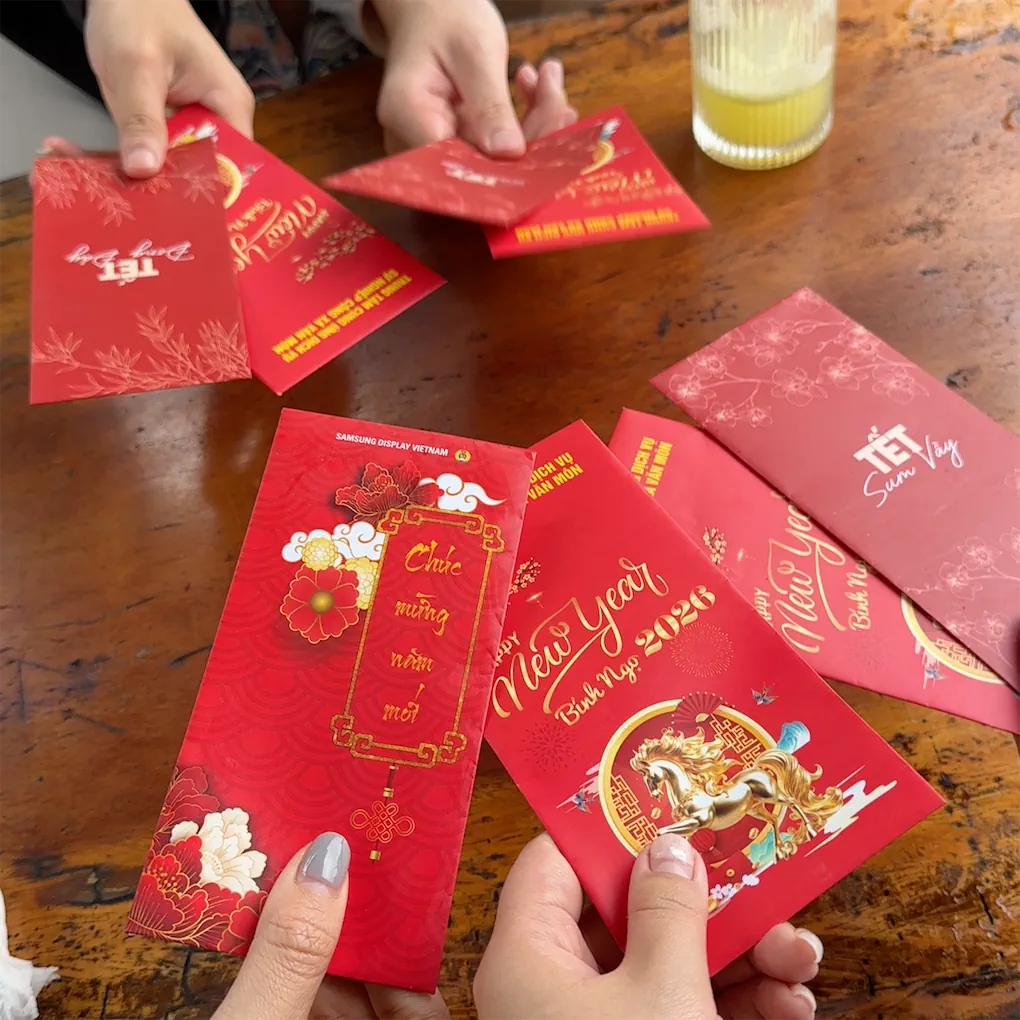
Li xi — lucky money in red envelopes. Red envelopes exchanged between generations are visible everywhere during Tet, a small but meaningful custom tied to wishes for luck in the year ahead.
Tet food, available only this time of year. Banh chung (square sticky rice cake) and banh tet (its cylindrical counterpart) are the signature dishes, served alongside pickled vegetables, candied fruits, and elaborate family meals. Some hotels and restaurants offer special Tet menus during this period.
Together, these traditions give travelers a chance to experience the rhythm of Vietnamese culture directly, rather than through a staged tourist experience.
Traffic peaks around the first and last days of the holiday. Millions of people travel home before Tet to reunite with family, then return to the cities right after. This creates two predictable high-traffic periods:
2–3 days before Tet begins, as people head home — roads, train stations, and airports become congested.
The last 1–2 days of the holiday, as everyone returns to the cities for work — often the busiest travel window of the year on major roads and at airports.
Travelers arriving or departing on these specific days should build in extra time for transfers, particularly to and from airports, as normal travel times can extend significantly.
Many small businesses close. Family-run restaurants, local shops, and some smaller attractions shut for several days so staff can be with family — a widely observed tradition rather than a formality. Larger hotels, international restaurants, and major attractions in bigger cities generally stay open, though with adjusted hours, so confirming specific opening times is recommended.
Rural and homestay experiences may slow down. Trips involving countryside stays or local guides should account for the possibility that hosts are also observing the holiday with their own families, which can affect availability.
Prices may temporarily rise. As a peak travel season, hotels, transport, and some tours often carry a seasonal price adjustment, sometimes referred to as a Tet surcharge — standard across the travel industry at this time of year, though it means last-minute bookings tend to cost more than the same trip planned further in advance. Checking whether a quoted price already includes this adjustment can help avoid surprises later in the booking process.
Given the shifting dates, business closures, and travel peaks, planning a Tet trip benefits from booking early — locking in flights and accommodation, and mapping the itinerary around the two high-traffic windows noted above.
For travelers concerned about last-minute surcharges or price changes, booking in advance is the most reliable way to avoid surprises. Reserving with us ahead of time means seasonal pricing is clearly outlined upfront, the itinerary is planned around the smoothest travel days, and there are no surprises at checkout.
Reach out to our team to start planning a Tet trip that reflects how Vietnam truly celebrates its most important holiday of the year.