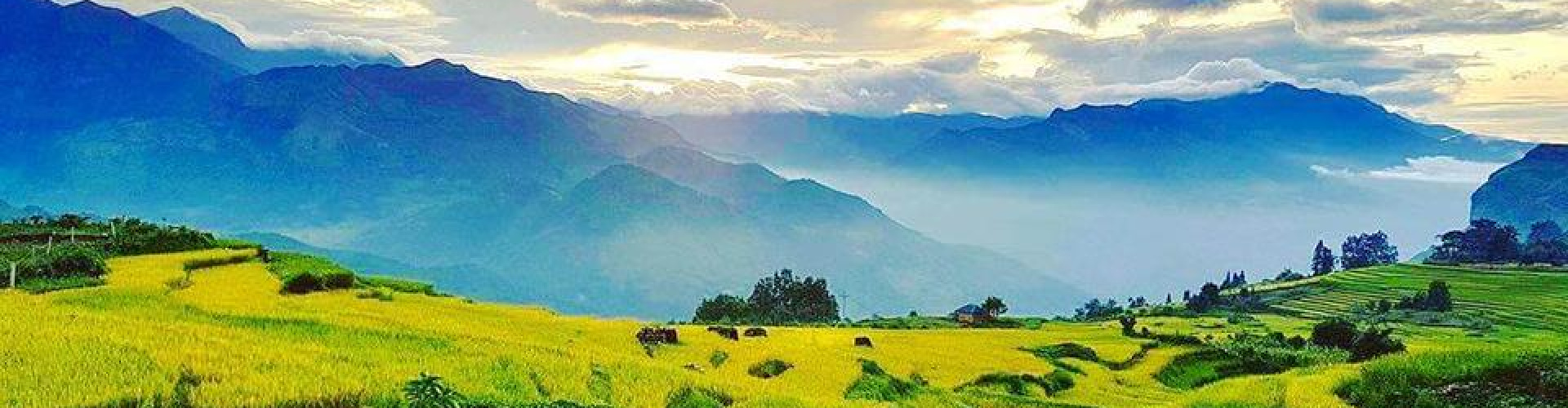
Lai Chau
Phan Xi Pang (3,143 m) – the highest peak in Vietnam, straddling the Sapa district of neighboring Lao Cai province.
Phu Si Lung (3,076 m) – another towering summit, offering breathtaking views.
Things to see and do
Sin Suoi Ho – An authentic H’Mông Village: Traditional H’Mông stilt houses, Orchard flower gardens, a short trek from the village, Ethnic markets on Saturday
The Pavie Path Trek (Lao Cai – Lai Chau Route) : The Pavie Path is a historic mountain trail named after Auguste Pavie, a French explorer who mapped the region during the colonial era. It was once a crucial route connecting Lao Cai and Lai Chau, cutting through Hoang Lien Son’s rugged terrain. Today, it's an epic trekking route with breathtaking views of rice terraces, deep valleys, and remote villages.
Rong May Glass Bridge: Length: 2 meters wide, approximately 60 meters long, with a transparent glass walkway. Around 500 meters above the ground, offering a thrilling experience and Panoramic sights of Hoang Lien Son Mountain Range and O Quy Ho Pass.
Cross the O Quy Ho Pass, one of the most thrilling mountain passes in Vietnam, connecting Lai Chau and Sapa.
Explore the Pu Sam Cap Caves, a fascinating underground wonder.
Meet the ethnic minorities of Lai Chau, including the Tai, H’Mông, Giáy, Dao, and Lahu communities.
O Quy Ho Pass: The Legendary Mountain Road
The O Quy Ho Pass connects Tam Duong district to Sapa in neighboring Lao Cai province. Perched at 2,000 meters above sea level on National Road 4D (QL-4D), it is one of the five most challenging mountain passes in northwest Vietnam.
The winding, steep road spans nearly 50 km, hugging cliffs on one side while offering spectacular views of the rugged Hoang Lien Son mountains on the other.
Good to Know
When to visit?
Best Time to Visit
September – October: The perfect time to witness the golden-hued terraced rice fields in Mu Cang Chai and Muong Than (Than Uyen district).
The climate is similar to that of the Northwest region, with cool, misty mornings and crisp mountain air.
Access
From Hanoi:
By private vehicle:
Route QL-23 via Nghia Lo, Mu Cang Chai, and Than Uyen (420 km).
Expressway Hanoi – Lao Cai (CT-5), 380 km (shorter travel time).
By bus:
Multiple agencies operate Hanoi – Lai Chau routes, mainly from My Dinh Bus Station.
Some departures are also available from Giap Bat Bus Station.